Sales: (844) 394-9300
Service: (418) 439-3333
Parts: (418) 439-3333

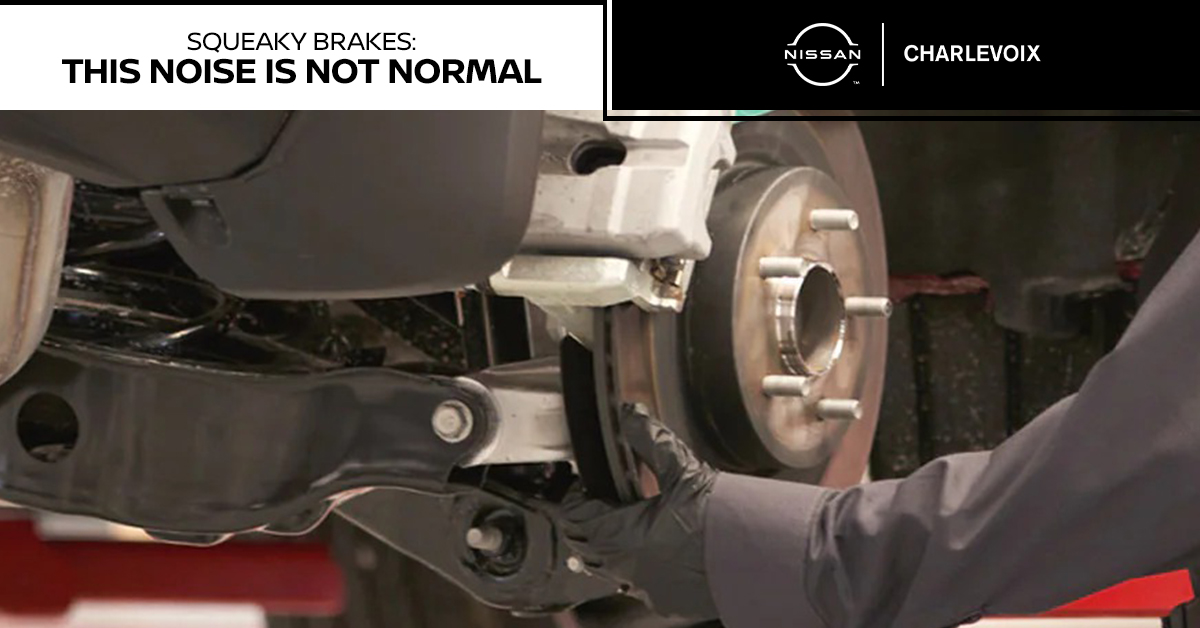
Squeaky brakes should never be treated as a minor detail. Hearing a squeak or squeal when you press the pedal is often the first sign of a developing mechanical problem.
Even if your vehicle still seems to brake normally, the noise means that one component is not working as it should. This symptom is common — but it should never be ignored.
A braking system works through controlled friction. When that friction becomes irregular, noise appears. That sound is a clear mechanical warning sign.
When brake pads become too thin, the friction material gradually disappears.
➡ Metal then begins rubbing against the rotor.
At that stage, the noise usually becomes sharper and more constant. Continuing to drive can damage the rotors, which often doubles the repair cost.
After a damp night, an extended parking period, or during winter in Quebec, a thin layer of rust can form on the rotors.
In that case:
If the squeaking continues beyond a few minutes of driving, an inspection is recommended.
Warped brake rotors can cause:
This issue directly affects braking quality and requires prompt attention.
Improper installation, incompatible components, or poor-quality parts can lead to:
A braking system should always be installed according to the manufacturer’s specifications.
The noise alone is not always critical. What is dangerous is failing to check the cause.
Ignoring squeaky brakes can lead to:
Replacing brake pads is a relatively simple service. Waiting too long may require replacing the rotors and other components as well.
Schedule an appointment promptly if:
A preventive diagnosis helps avoid a more serious failure.
At Charlevoix Nissan, the service department performs:
Regular inspections, especially during seasonal tire changes, are a good way to keep your braking system safe.
If you live in the area, it is better to act as soon as an unusual noise appears rather than wait for the problem to get worse.
Book an appointment with the service department for a complete inspection.
No. Moisture or light rust can also cause temporary noise.
That depends on the cause. Without an inspection, it is impossible to confirm whether the issue is minor or serious.
Surface rust or moisture wears off through normal friction.
Yes. A break-in period can cause slight temporary noise.
Brake noise is never trivial. Squeaky brakes are a clear mechanical warning.
Taking action early helps avoid major repairs and maintain optimal safety on the road.